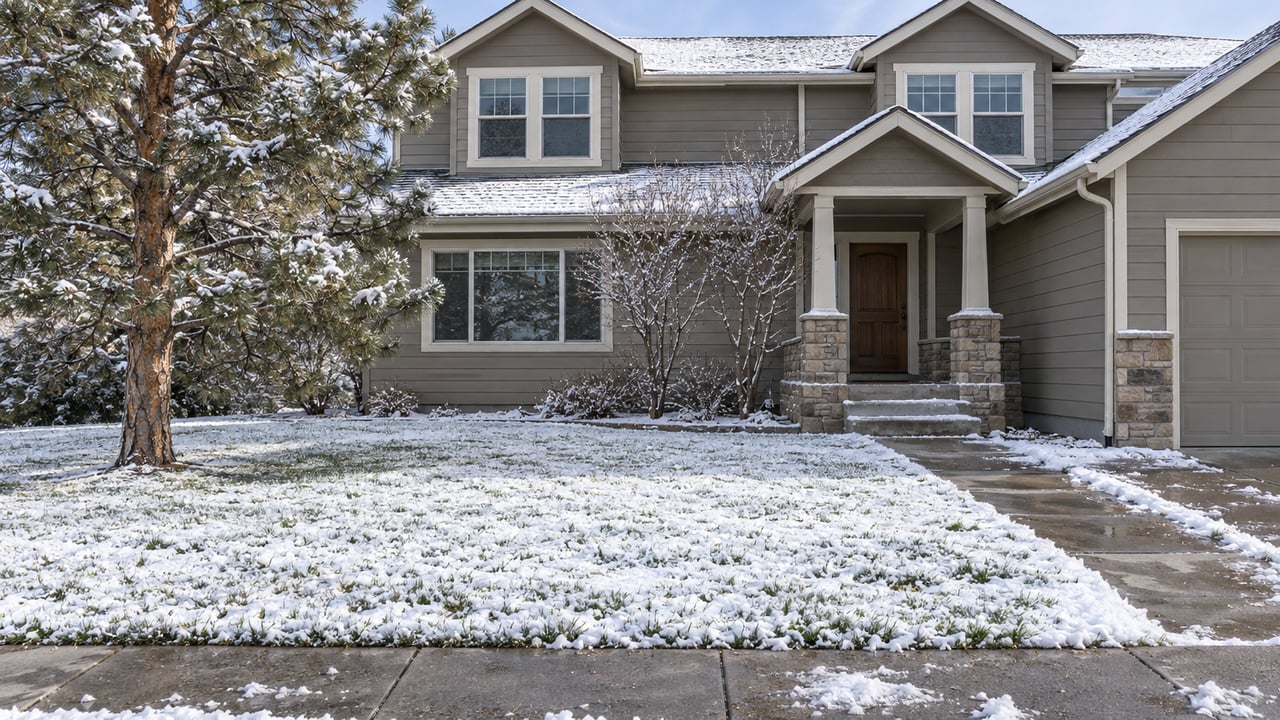
When the first real storm of the season clears out in Highlands Ranch, the surface with the earliest deadline is the four-foot strip of concrete in front of your house. It can come due before a county plow has turned onto your street.
That's how the rules are written. Three separate parties handle snow here, and each one runs on its own trigger. Once you know which clock applies to which surface, a lot of winter frustration starts to make sense. The packed snow in your cul-de-sac, the snowy trail behind your fence and the berm at the end of your driveway all follow from those triggers.
Three Parties, Three Start Times
The Highlands Ranch Metro District's snow removal page splits the work into three columns.
| Surface | Who clears it | When work starts | Order of work |
|---|---|---|---|
| Streets, about 2,400 lane miles | Douglas County | When snow begins to fall | Major arterials, then collectors, then residential streets, then cul-de-sacs |
| 38 miles of hard-surface trails and 112 miles of sidewalks along arterial roads | Highlands Ranch Metro District | At three inches of snow, or when snow is likely to stay more than 24 hours | Staffed buildings, then Northridge Park lots, then arterial sidewalks and trails, then other park lots |
| Sidewalks in front of and beside a home, plus any adjacent mailbox or fire hydrant | The homeowner | Must be done within 24 hours after snow stops | Not applicable |
The county starts first but finishes with residential streets. The Metro District waits for a depth threshold. The homeowner has no threshold at all, only a 24-hour deadline once the snow stops.
Your Street Is Last in Line on Purpose
Douglas County's snow priorities page puts arterial roads and access to emergency facilities first, collector roads and school bus routes second, and local streets and cul-de-sacs last. The reasoning is in the county's snow removal FAQ, updated in September 2026: once the arterials and collectors are clear, emergency services can usually get within a few blocks of every home.
So the standard for your street is different from Highlands Ranch Parkway or University Boulevard. Main roads are cleared curb to curb. Residential streets usually get one or two passes and stay packed snow, not bare pavement. In a heavy storm, the FAQ says, a cul-de-sac may not be cleared until the day after the arterials and collectors are done. In a light storm it may not be plowed at all if the snow is expected to melt within 24 hours. The exception is a street with hills or curves that could ice over.
The equipment numbers explain the triage. In an Oct. 13, 2026 winter-readiness post, the county listed 70 public works operators, mechanics and supervisors, 54 large plows, 19 medium plows and 9 light plows. It also reported more than 6,300 tons of dry material and room for 120,000 gallons of liquid deicer. That fleet is split across six snow removal districts that cover all of unincorporated Douglas County. The 2,400 lane miles inside Highlands Ranch are only part of its territory.
Two details in the FAQ decide whether your street gets plowed at all. Plows skip subdivision streets when parked cars or other obstacles block safe, continuous operation, and they may come back after the street is clear. The county asks residents to move vehicles off the street when a storm is forecast. You can also check your own block before a storm. The county's ice and snow page links an interactive Snow Removal and Route Priority map where you enter an address and see its priority.
The Sidewalk Behind Your Fence Belongs to Someone Else
Many Highlands Ranch homes back onto an arterial, with a sidewalk or trail running along the far side of the fence. That walk usually isn't the homeowner's job. The Metro District clears 112 miles of sidewalks along arterial roads and 38 miles of hard-surface trails, more than 150 miles in all.
The district's trigger explains why those paths can stay white longer than the street. Crews start plowing at three inches of accumulation, or when snow is likely to stay on the ground for 24 hours. Below three inches, a snow crew coordinator decides based on the forecast and site conditions, and crews follow up on the days after a storm with ice melt or sand.
The district's order puts arterial sidewalks and trails third. Staffed and programmed Metro District buildings come first and the Northridge Park parking lots second. The page also says sidewalks right next to streets may be delayed in big storms "due to high volumes of street-plowed snow." So the county clearing the road can bury the district's sidewalk, and the district has to wait until conditions let it dig out.
One trail segment is closed for now. Douglas County's Highlands Ranch Parkway reconstruction page, updated Oct. 21, 2026, says the bike and pedestrian trail between East Highlands Ranch Parkway and Ridgeglen Way stays closed for the rest of the project. Walkers are directed to the marked crossing and pedestrian route at Burntwood Way.
The Sidewalk in Front of Your House Has the Shortest Deadline
Douglas County handles snow removal in its unincorporated areas, and Highlands Ranch is one of them. The homeowner's deadline comes from Douglas County Ordinance O-007-003, adopted in 2007, which applies throughout unincorporated Douglas County. Whoever controls a property next to a sidewalk has to clear it within 24 hours after snowfall stops. The ordinance defines a sidewalk as a paved walkway along a street and excludes trails in parks or designated open space. The ordinance also lets the county give more time for a specific storm by posting an extension on its website. If no extension is posted, the 24 hours stands. The Metro District's version spells out the scope for Highlands Ranch: sidewalks in front of and along the sides of a home, plus any adjacent mailbox and fire hydrant.
Put that next to the county's schedule. Unless the county posts an extension, a heavy storm that ends overnight starts your 24 hours right away, while the county says your cul-de-sac may not see a plow until the next day. The front walk can be due before the street outside it is open.
Where the snow goes is regulated too. The ordinance bars putting removed snow into a street. The county FAQ explains why and suggests an alternative:
"It is required that owners place snow from their driveways and sidewalks onto their front yard and not into the street. This practice reduces the number of icy areas on streets and ensures proper drainage flow into the storm sewer. Additionally, your lawn can use the available moisture over the winter."
The FAQ also points out that this matters most along school walking routes, so kids aren't pushed into the street. After a dry season, the lawn half of that advice is useful too.
Why the Berm Comes Back After You Shovel
Clearing the end of the driveway on day one doesn't always hold. The county FAQ says cleanup and widening runs can happen one to four days after a storm, depending on how severe it was and how hard the wind blew. Those later passes widen the lanes so the pavement can melt off, and they can push snow back onto sidewalks and driveways. Melt from nearby yards can also refreeze on the street overnight. The county takes reports of that ice through its Report a Problem form.
Mailboxes fall under the same reasoning. The FAQ says mailboxes along roadways are at the owner's risk. The county isn't responsible for damage from poor upkeep, heavy plowed snow or vandalism, and postal rules require residents to clear snow in front of the box. For damage that is the county's responsibility, use the same Report a Problem form and select "Other."
On the parkways, the county has one more rule. Passing an operating snowplow in "echelon formation," with two or more plows staggered diagonally across a multi-lane road, is a Class A traffic offense with a fine of up to $100.
Getting Ready Before the First Real Storm
Each of the three clocks gives you something to do this week:
- Your street's priority. Look up your address on the county's Snow Removal and Route Priority map so you know how far down the list your block is.
- Parking. When a storm is forecast, get cars off the street. Plows skip subdivision streets where parked vehicles block the way.
- Shovel-ready spots. The county FAQ asks that shoveled snow go onto your front yard, so think about where it will fit, and remember the mailbox and hydrant if your lot has them.
- The right contact. For streets, mailboxes and refrozen ice, go to Douglas County through its Report a Problem form. For arterial sidewalks and trails, call the Metro District at 303-791-2710.
- Walking routes. While the parkway project is still underway, plan walks near Highlands Ranch Parkway around the Burntwood Way crossing.
The ordinance and county guidance above are general information, not legal advice. If you have a question about your property or a specific situation, check with Douglas County or the Highlands Ranch Metro District directly.
If you're sorting out which winter jobs belong to you and which belong to the county, the Metro District or your HOA, I'm happy to help, whether that's for the home you have now or one you're considering. Schedule a Consultation with Melissa Smessaert.